Group Myllymaki Tasnim
Group members
- Ossi Myllymäki
- Nadira Tasnim
Group Assignment: 3D Scanning and Printing
In this assignment we tested the properties of different 3D printers with test pieces designed
to give the printer a challenge.
TEST 1
3D printer: Ender 3
Rafts: No
Support: yes
Resolution: 0.2 mm
Infill: 15%
Overhang
A part of the model that sticks out horizontally parallel to the build platform. This can
cause the layers to lose their structure when printed without support.
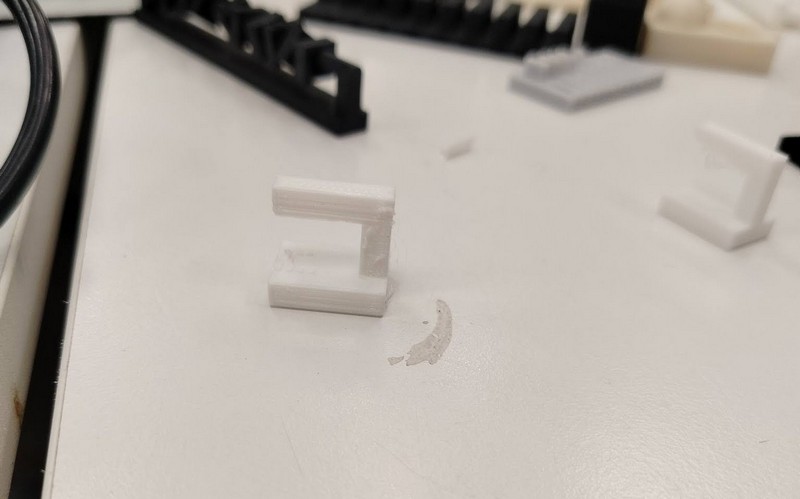
With support the overhang is printed successfully.
Clearance
In a model, clearance is the distance needed between two moving parts (e.g., the gap between
a gear and a joint).
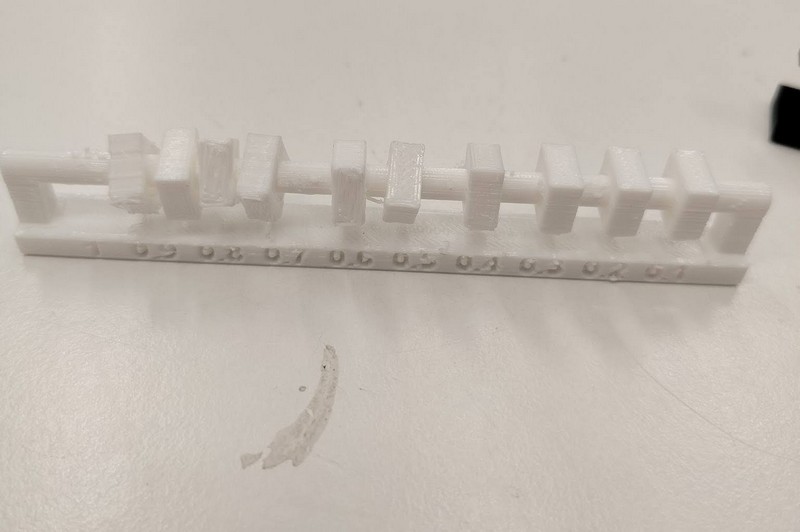
All pieces above clearance 0.3mm can move freely on the pole.
TEST 2
3D printer: Ender 3
Rafts: No
Support: No
Resolution: 0.2 mm
Infill: 15%
Angle
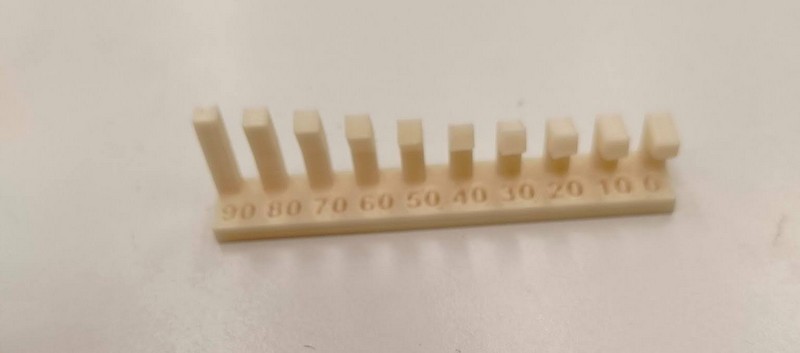
The value on the object shows the angle of the piece hanging from the stick. 0 degrees means
that the piece is is perpendicular to the stick, and 90 degrees means that the piece is parallel
to the stick. All pieces have been printed successfully.
Bridging
Bridging refers to the distance between 2 intermediate supports of a structure. Although
horizontal spans are discouraged, certain geometries can be printed.
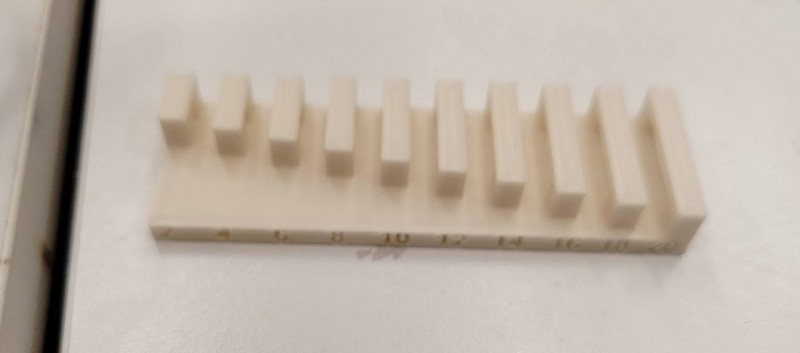
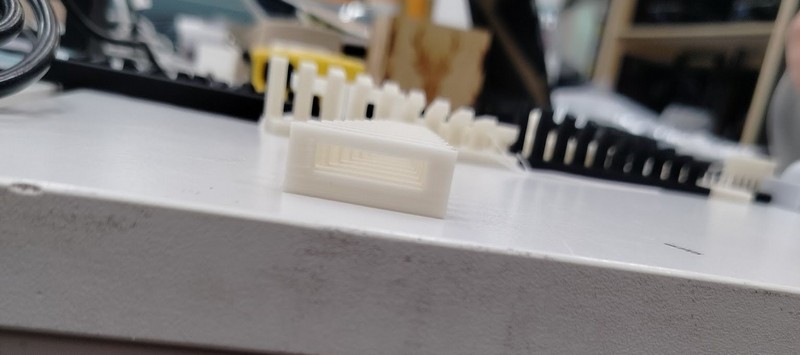
In the pictures above, all of the bridges are printed successfully.
Overhang
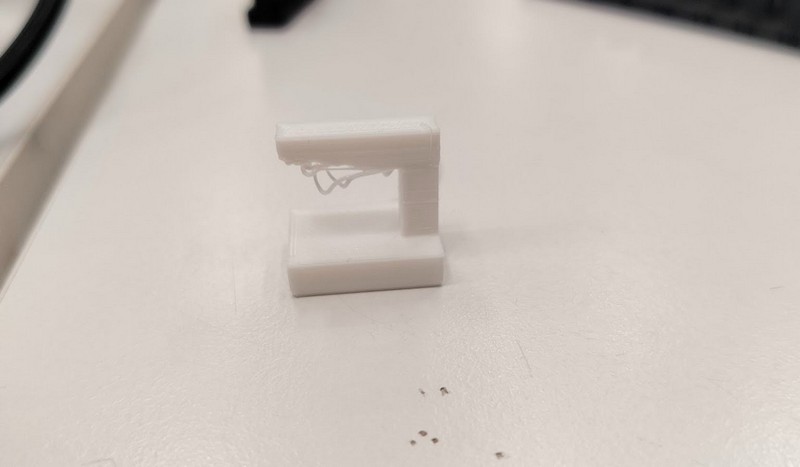
Without support, the overhang is not printed successfully. The layers lose their structure and
the piece is not fully printed. Some of the material is hanging from the overhang part.
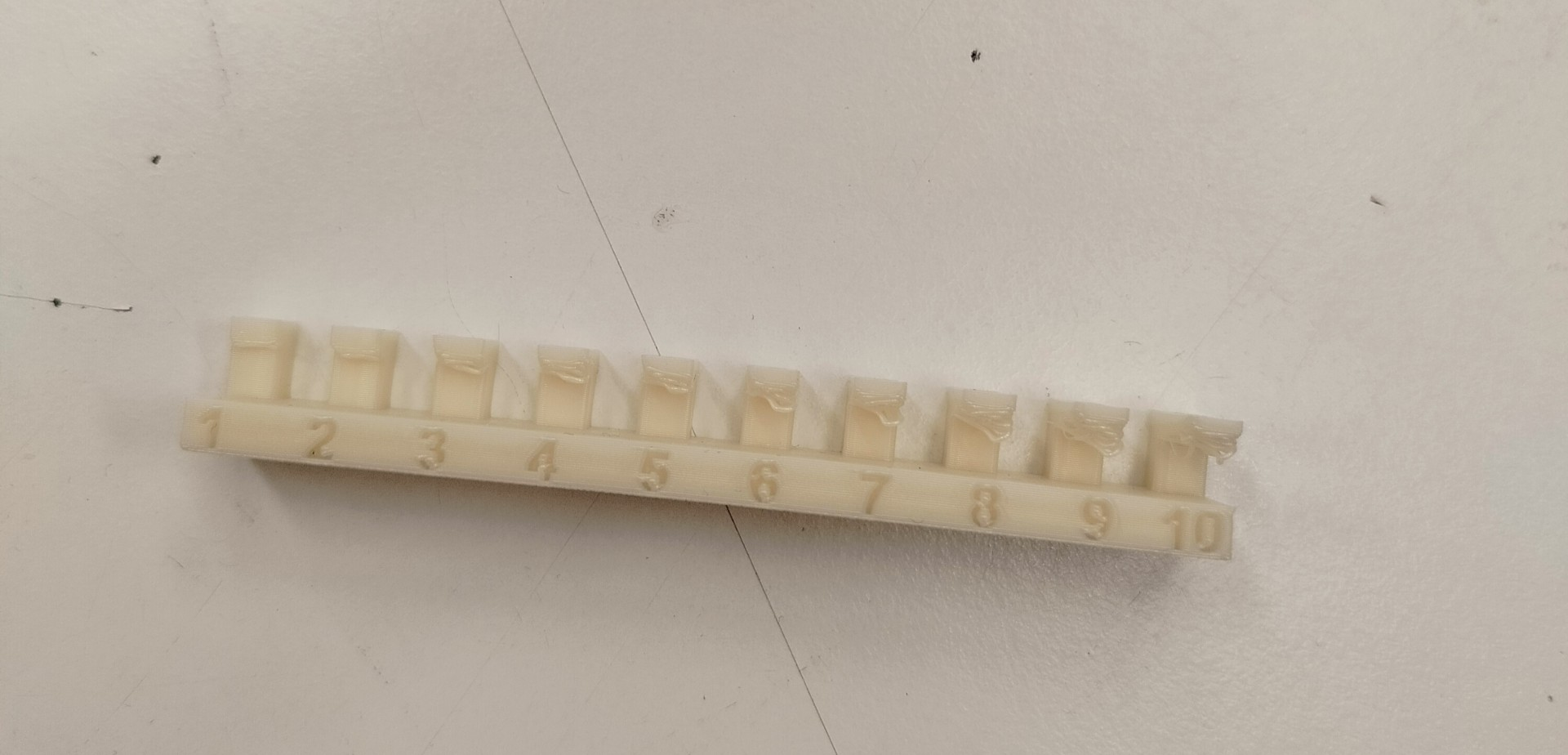
This piece contains multiple different length overhangs. As the length of the overhang increases
the print quality decreases as more material is hanging from the overhang part. Only the
1mm and 2mm overhangs are printed without bigger issues.
Dimension
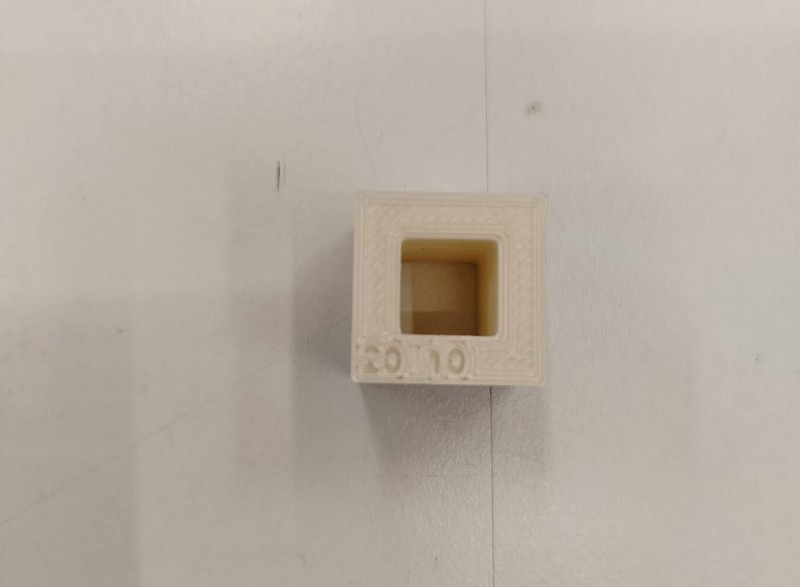
The inside hole width is 9.98mm and the outside hole width is 20.06mm. The model was designed
with 10mm and 20mm holes.
Anisotropy
The variation in mechanical properties depending on the direction of the print.
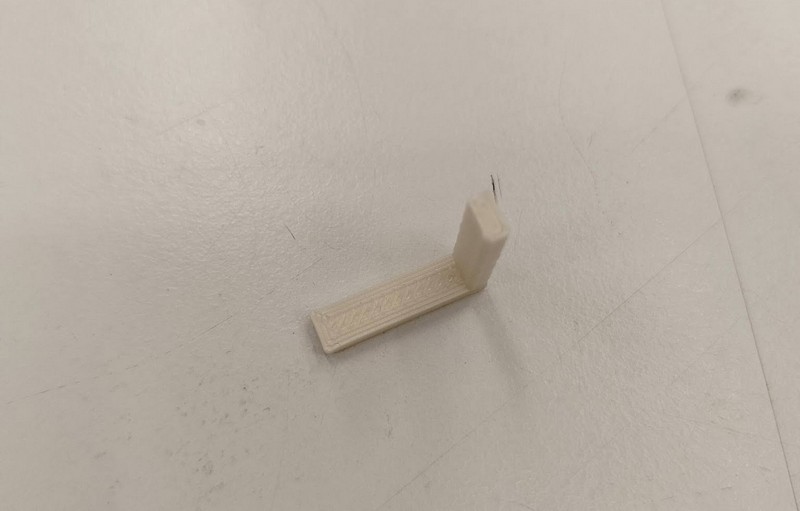
The picture above shows the horizontal texture of the printer.
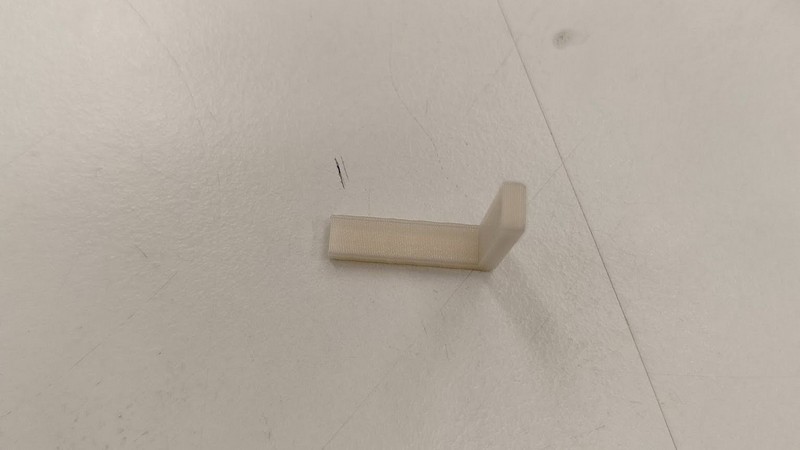
The picture above shows the vertical texture of the printer. The vertical part is more fragile
than the horizontal part since it contains multiple layers. The separate layers can break
apart more easily than the continuous horizontal texture.
Wall thickness
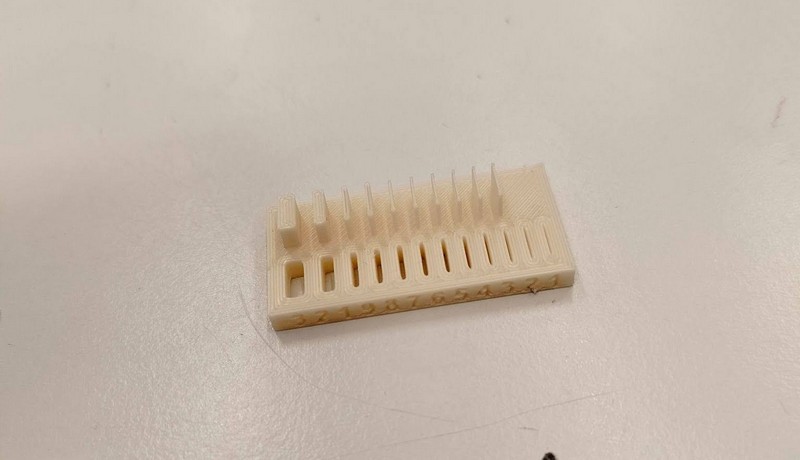
The piece in the picture above has walls of different thicknesses. The piece from 3mm to 0.3mm
are printed successfully, but the pieces with 0.2mm and 0.1mm wall thickness were too thin
for the printer to print successfully. The walls are missing completely.
The piece has also corresponding holes with the same thicknesses. The holes with 0.2mm and
above are printed successfully, but the hole with 0.1mm thickness is a little shorter than
the others.
Surface finish
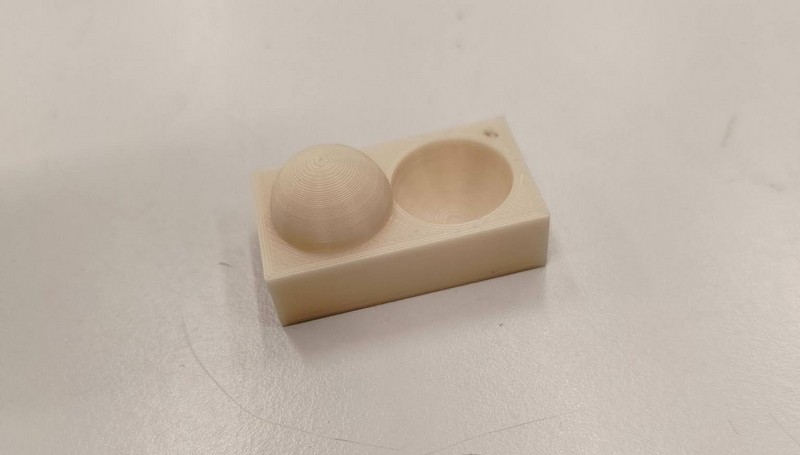
The surface finish of the piece in the picture above is a bit rough. You can clearly see
the layers of the print especially on the dome part.
TEST 3
3D printer: CORE One Rafts: No Support: Yes Resolution: 0.2 mm Infill: 15%
Overhang
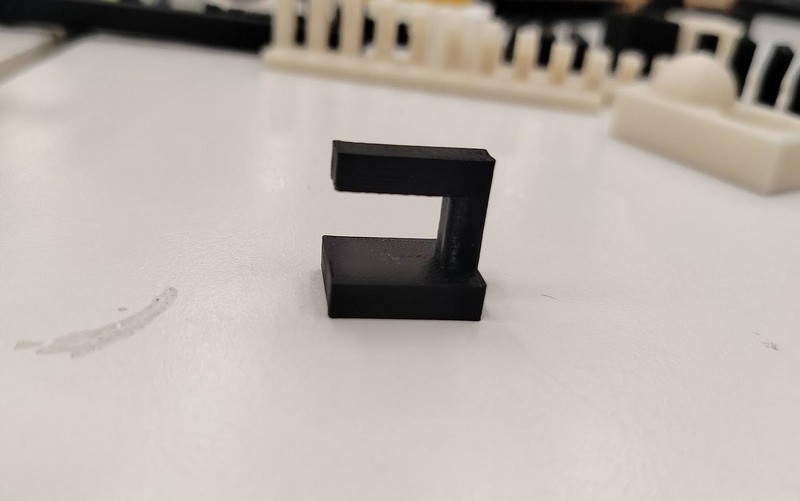
The overhang is printed successfully with support. The result looks clean.
Clearance
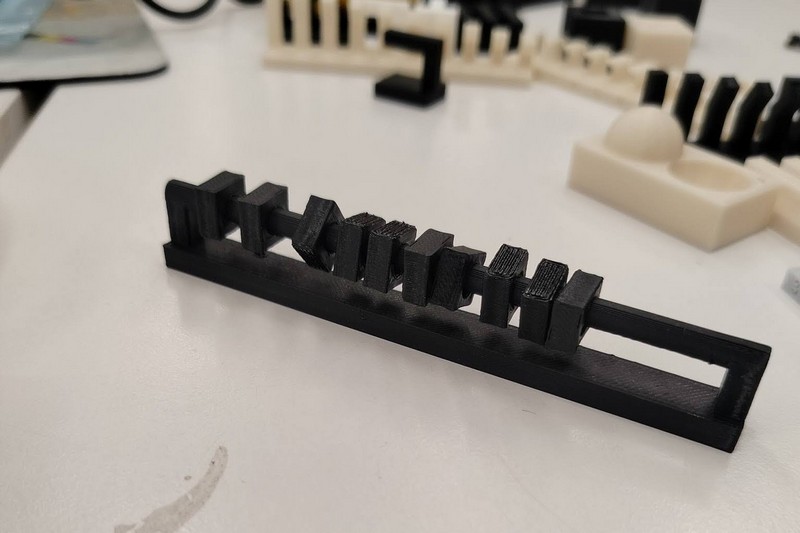
All pieces above clearance 0.3mm can move freely on the pole. The pieces with 0.2mm and 0.1mm
clearance are stuck on the pole and cannot move.
TEST 4
3D printer: CORE One Rafts: No Support: No Resolution: 0.2 mm Infill: 15%
Angle
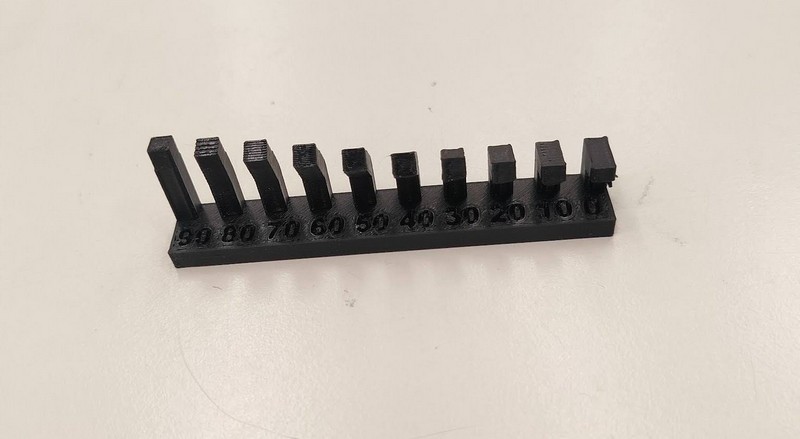
All sticks have been printed successfully. The stick with the most overhang has some material
hanging from it.
Bridging
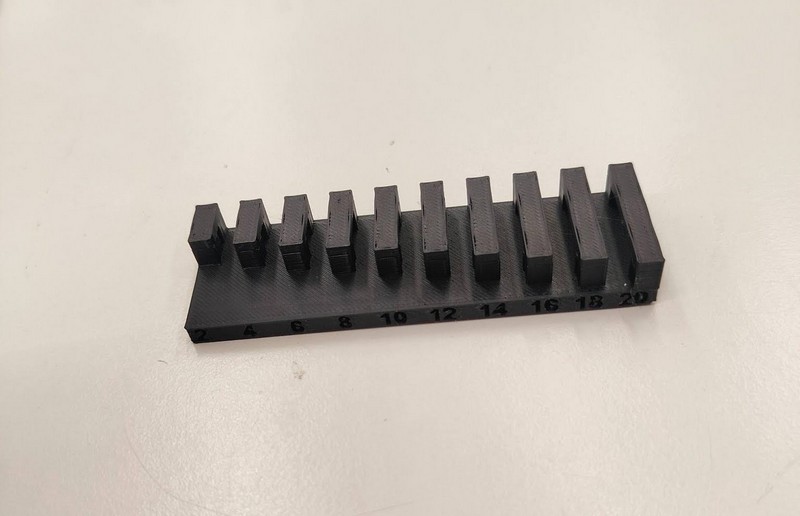
All of the bridges are printed successfully.
Overhang
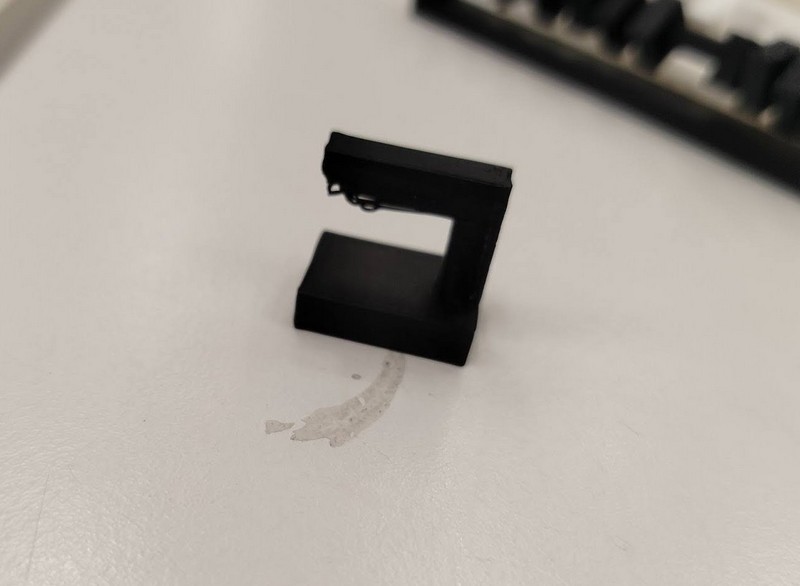
The CORE One has the same result as the Ender 3 when it comes to overhang without support.
Dimension
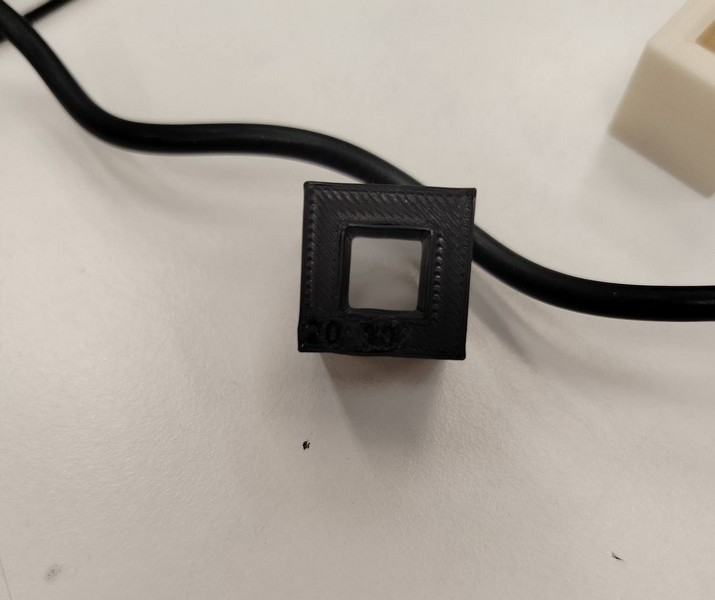
The inside hole width is 9.92mm and the outside hole width is 20.00mm.
Surface finish
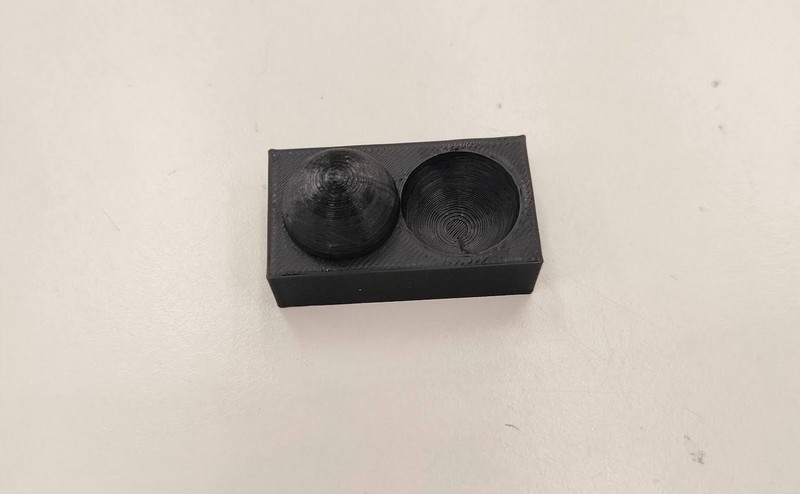
The surface finish is a little smoother than the Ender 3's, but you can still see the layers
of the print.
Infill
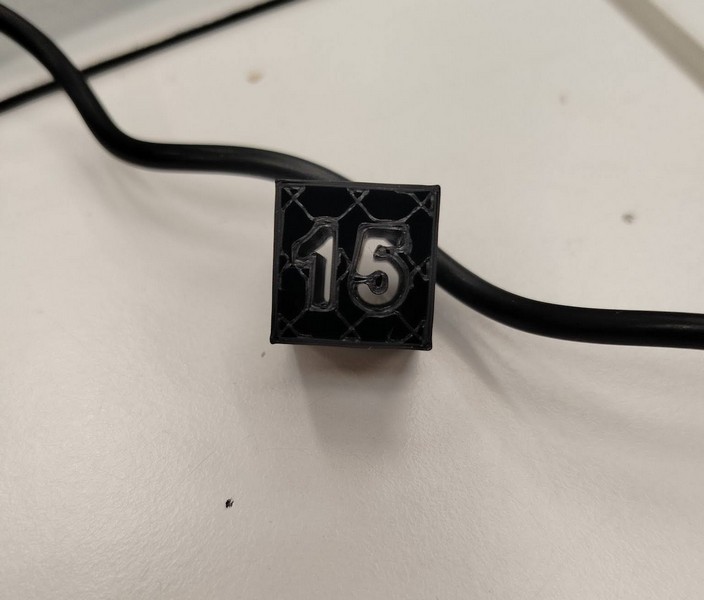
The infill is quite sparce with 15% infill, but it is enough to give the piece enough strength.
Having sparce infill reduces the amount of material used and the printing time.
TEST 5
3D printer: Heygears UltracraftReflex RS Turbo
Rafts: Yes
Support: Yes
Resolution: 0.05 mm
Infill: 100%
Surface finish and wall thickness
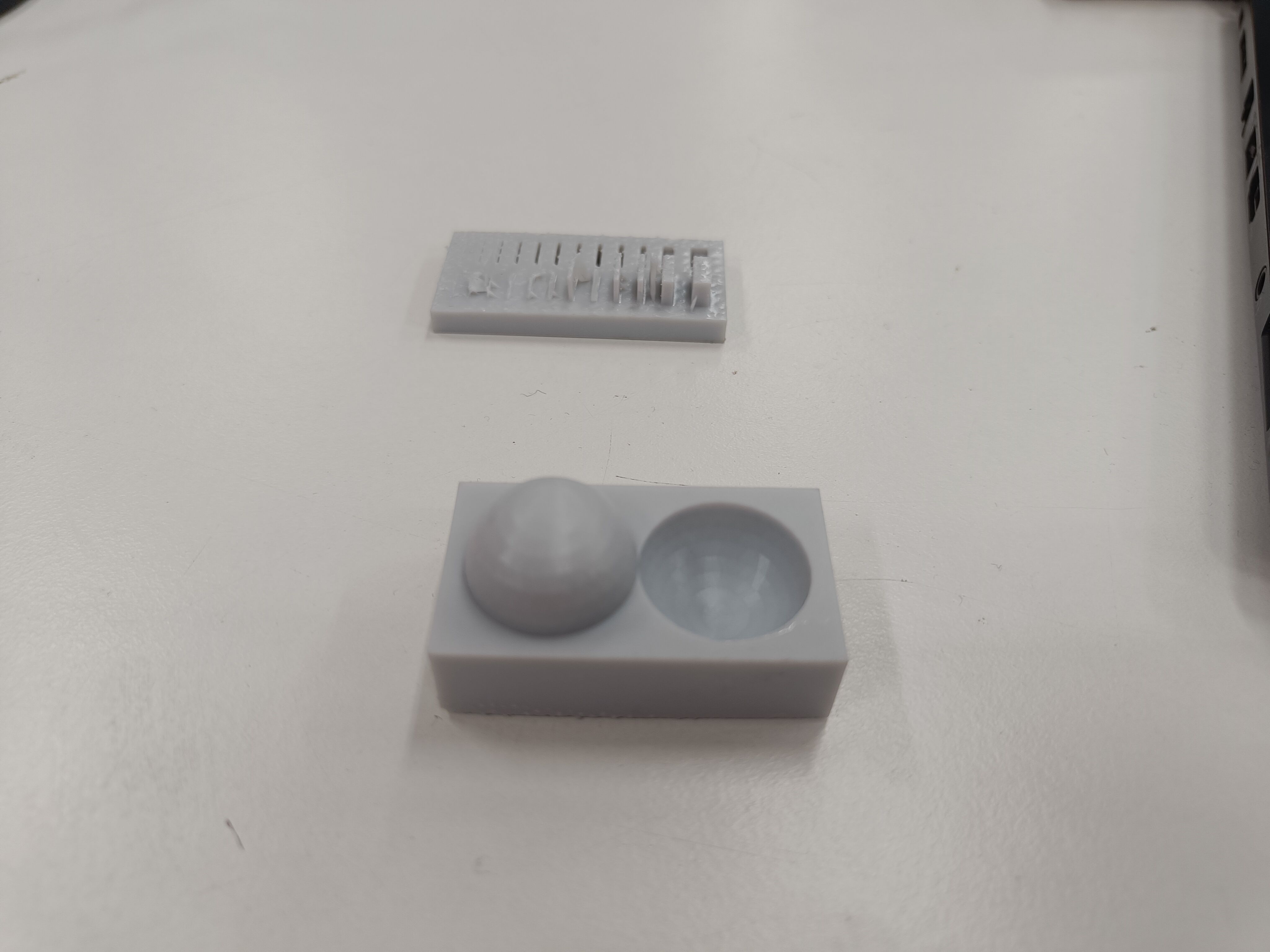
The surface finish of the piece in the bottom piece looks fantastic. The surface is really
smooth and piece looks just like the model.
The wall thickness piece print was a failure since the piece was put upside down so that
the thinnest walls were accidentally removed with the supports. But as we can see from the
holes, the piece with 0.1mm wall thickness is missing completely, so the printer performs
worse than the Ender 3 and CORE One when it comes to printing thin holes.
Technical data of the printers
| Ender 3 | CORE One | Heygears | |
|---|---|---|---|
| Layer height | 0.2 mm | 0.2 mm | 0.05 mm |
| Material | PLA | PLA | Resin |
| Bed temp | 60°C | 60°C | N/A |
| Material extruder temp | 215°C | 230°C | N/A |
| Nozzle diameter | 0.5mm | 0.4mm | N/A |
| Build volume | 220x220x250mm | 250x220x270mm | 222x122x228mm |
| Printing precision | ±0.1mm | ±0.1mm | 0.1-0.025mm |