Group Myllymaki Tasnim
Group members
- Ossi Myllymäki
- Nadira Tasnim
Group Assignment: Molding and Casting
In this assignment, we learned about different casting materials and reviewed the safety datasheet. Then we cast some test pieces on pre-made molds and compared the results.
Casting Materials
Smooth-Sil 940
This material cures at room temperature with negligible shrinkage and is suitable for making molds of any size. It has good chemical abrasion and heat resistance. It is also not classified as hazardous. Plasters, concrete, wax, low-melt alloys, and resins can be cast into silicone molds without a release agent. It is suitable for food-related applications.
Smooth-Cast 300 series
This material is an ultra-low viscosity material that produces a tough, durable, machinable, and paintable cast. It may be harmful in contact with skin or if inhaled. It can also cause allergic reactions or serious eye irritation. It is suitable for reproducing small to medium size sculptures, making prototype models, special effect props and decorative jewelry.
Safety
The molding and casting room contains a lot of different kinds of materials. Make sure to not touch anything without gloves. Even when working with a safe material like silicone, disposable gloves are mandatory. Wear safety goggles and a jacket as well. The ventilation must be turned on at all times. Read the safety datasheets before using any material. Wash your hands before leaving the room.
Casting
We cast one item using silicone and two with liquid plastic. Other materials available in our lab are craft concrete, beeswax, and low temperature alloy.
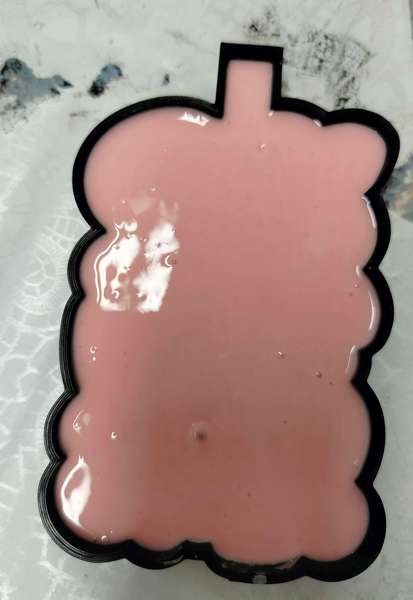
On a flat 3D printed mold, we made a cast with Smooth-Sil 940, which has a pot life of 30 minutes and cure time of 24 hours. The mold was sprayed with a release agent before pouring the mixture in.
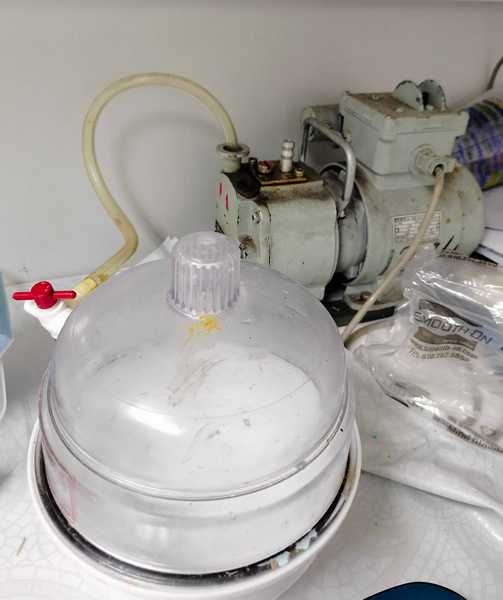
After mixing the silicone cast, it was put in the degassing chamber to get rid of air bubbles. The chamber creates a vacuum and it can take several minutes for the bubbles to stop appearing.
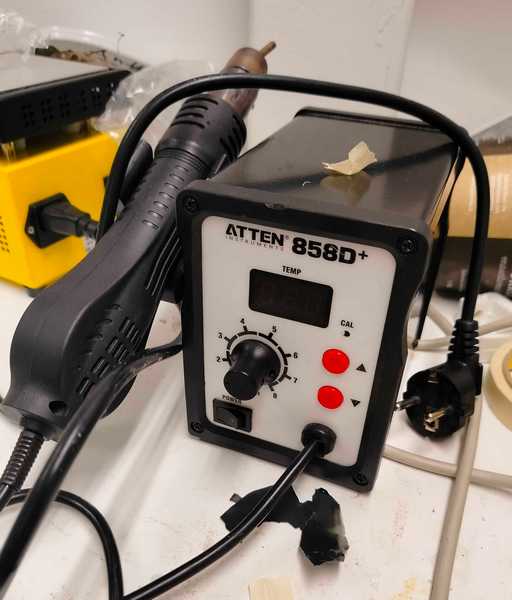
The Atten 858D+ hot air station was used to blow out any remaining bubbles after the mixture was poured.
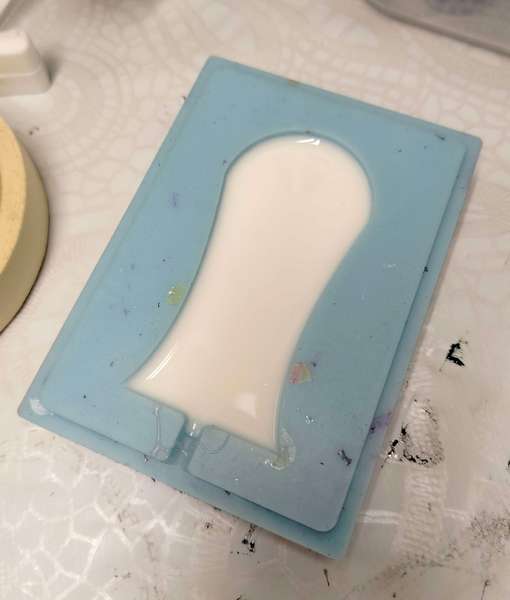
We also made a small bullet-like object with a CNC-milled mold. The bullet was cast with Smooth-Cast 310 (pot life - 15-20 minutes, cure time - 3-4 hours).
Toni had made a two-part mold for a six-sided die by pouring silicone into a plastic cup. We used this mold to make a die using Smooth-Cast Onyx (pot life - 2.5 minutes, cure time - 10 minutes).
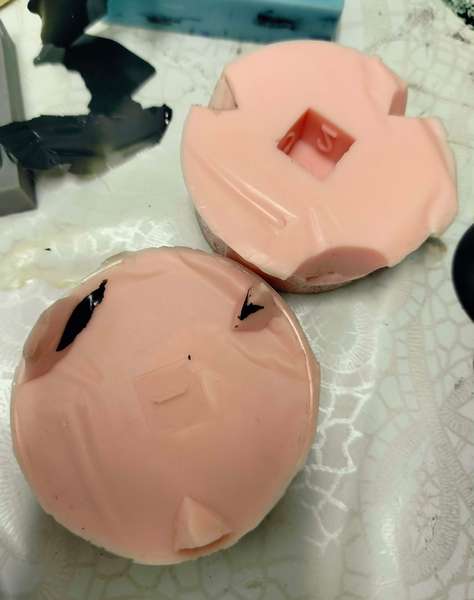
The grooves and ridges on the sides are to help piece the two sides in the correct position.
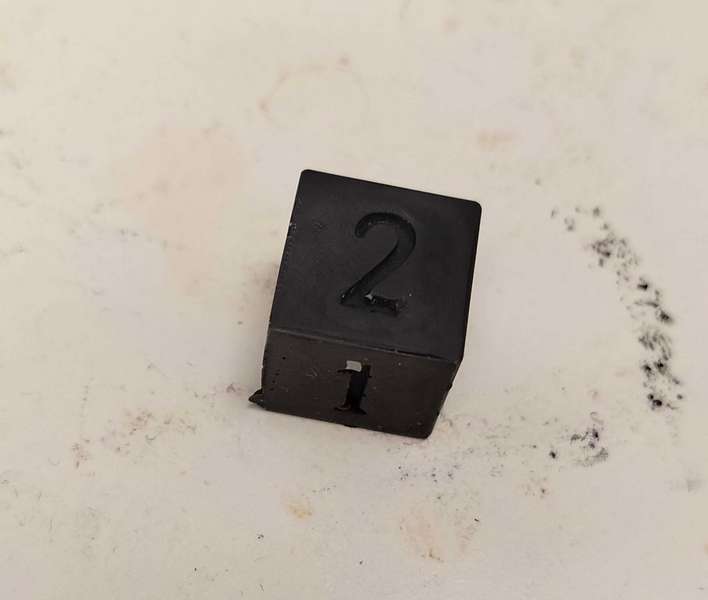
The finished product had some holes in it from air bubbles but it was a sufficiently well-made die.
Results
Mold Types
The silicone cast was quite difficult to pull out of the mold. A pair of pliers was needed, which effectively damaged the tip of the material. This mold was 3D printed, so the resulting cast had a lot of textures owing to the layer-by-layer 3D printing process.
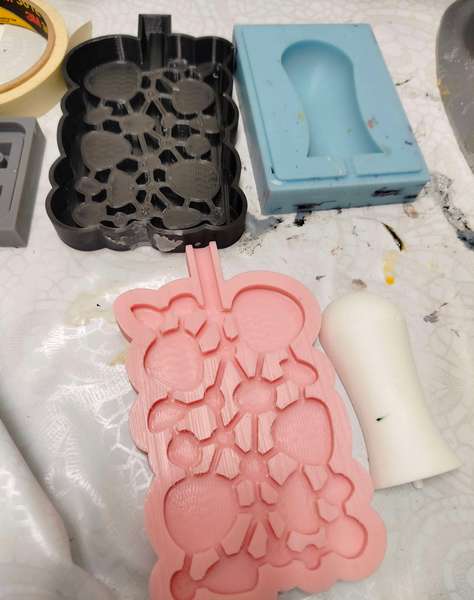
If you wish to avoid textures, a CNC-milled mold is the better option. CNC-milling can also produce more complex shapes.
Pot Life
The material with the higher pot life ensures that you can work slowly and get rid of all the air bubbles effectively. There is no need to rush when pouring the material into the mold. However, this also means the curing time is much higher. While a higher curing time can mean the material can get into difficult corners and settle quite nicely, the wait time may not be feasible in some cases.
The liquid plastic has a very short pot life and cure time. While it is time efficient, it also means you have stir the mixture and pour it into the mold within a few minutes. It may cause some air bubbles to remain and may even cause spillages if you are trying to hurry when pouring.